
Museum Exhibition Design in Abu Dhabi: How to Brief a Gallery Around Its Objects

If a visitor spends ten minutes in your temporary exhibition, which two objects should they remember, and what should they understand about the connection between them? Give the designer that answer alongside the floor plan. It will shape where people pause, how much text they can comfortably read and which display deserves the strongest sightline from the entrance.

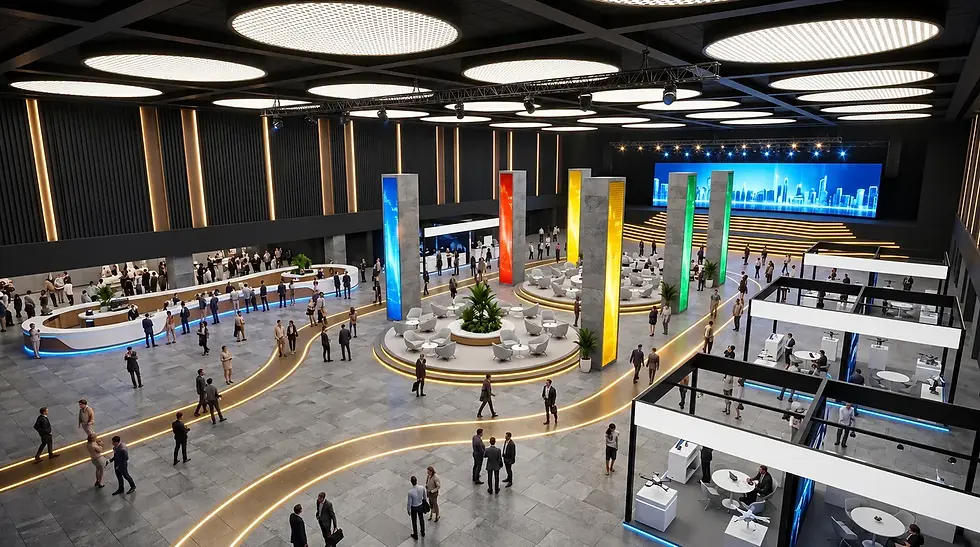
AI-generated gallery design showing how a ledger and objects can share a case while leaving a clear viewing route. View a display environment in the exhibition portfolio.
Give each object a job in the story
Start with a working object list. Give each piece an identifier, dimensions in its display position, a photograph and one sentence explaining why the curator selected it. Add the lender, loan status, permitted viewing sides, approved image rights and available translations. An unknown mount or a pending loan should be visible to everyone pricing the exhibition.
Louvre Abu Dhabi’s published procedure for outgoing loans asks borrowers to identify the works and describe the exhibition and receiving venue. That is a useful local example of information your registrar may need early. Ask each actual lender and conservator to confirm the display conditions and timing for their own objects.
Draw the crowd as well as the display cases
Imagine a gallery about pearl trading with a map, a merchant’s ledger and a small balance used for weighing pearls. The map helps a group understand the route. The ledger rewards close reading by one or two visitors. The balance benefits from a view of both pans. Giving all three identical wall bays would miss those differences.
Try the map where a guided group can gather and still leave a way past. Turn the ledger case so people leave the route to read it. Put an approved enlargement next to it if the entry is too fine to read from the viewing position. On the plan, draw a group at the map, two people reading and a visitor moving directly to the balance. Look for the first point where their paths conflict.
Prototype one bilingual label at its actual size
Choose the longest approved Arabic and English label. Print both scripts at intended size and place the test next to a full-size outline of the object. Read it standing and seated from the intended approach. Look for reflections across the text, a case edge in the line of sight or a label that sends two readers towards the same narrow spot.
Record who approves terminology, transliteration, image credits and the final object title. One corrected name can affect a label, wall text, floor guide and digital screen. Use the object identifier to track those changes together.
Ask for a design package the exhibition team can price
Request a visitor-route plan, case and graphics elevations, representative 3D views and a schedule tying cases, labels and media to the object list. Ask suppliers to identify allowances for specialist mounts, conservation review, lighting trials and installation. Before approving fabrication, check what happens if a loan is declined. A replacement image, replica or different object will have its own permissions and display needs.
Project references
Related reading. How to Brief an Exhibition Stand Designer in Dubai
Send me your floor plan, a provisional object list and your opening date. I can scope the exhibition layout and the views your curatorial and production teams need to review.
Explore Events & Exhibition Design in my portfolio.

Events & Exhibition Design 
3D Rendering 
360 VR Tour
Comments